Samuel Mbangula scored a hat-trick as Bologna beat AC Milan 4–2 in a match that changed direction in both halves. Mbangula opened the scoring after eight minutes, but Alphadjo Cissè replied in the 14th and 27th to give Milan a 2–1 lead at the interval. Bologna therefore needed a recovery despite having scored first.
Three second-half goals change the outcome
A Davide Bartesaghi own goal brought Bologna level after 60 minutes. Mbangula scored his second just two minutes later and completed the hat-trick in the 86th. Between the 60th and 86th minutes, Bologna moved from one goal behind to two goals ahead through three separate changes to the score.
The scorers must be kept distinct. Mbangula’s goals came in the eighth, 62nd and 86th minutes. Bologna’s other goal was the own goal, which does not count as a fourth for the forward. That distinction matters in a report centred on an individual scoring contribution: the team’s four goals and the player’s three are related but different totals.
Milan’s possession advantage did not extend to attempts
ESPN credits Milan with 66.4 per cent of possession, eight attempts and three shots on target. Bologna recorded nine attempts and five on target. The large difference in time with the ball therefore did not translate into a Milan advantage in either total attempts or efforts testing the goalkeeper.
Those figures give the outcome more context than possession alone. Milan finished with fewer shots on target as well as fewer goals, but the totals do not establish the quality of every Bologna chance or render every Milan possession meaningless. A fuller assessment of chance quality would require additional evidence, rather than an invented expected-goals figure attached to a familiar statistic.
A hat-trick overcomes a double
Cissè turned an early Milan deficit into a lead before half an hour had been played. Both Milan goals belonged to him, making his contribution central to the first-half reversal. Mbangula’s influence extended across more phases: the opener, the goal that restored Bologna’s lead after the interval and the late finish that widened the margin.
The own goal linked those two individual stories. It brought Bologna level before Mbangula put them ahead again. The final goal consequently completed a process rather than starting it: parity came first, a new lead followed and the late third personal goal supplied a larger cushion.
What can be reviewed after the result?
For Milan, the documented concern is losing the advantage built before half-time and conceding three goals in the second period. For Bologna, the notable achievement is recovering a score that had turned against them after an encouraging start. Attributing either development to a specific coaching decision or fitness problem would require an independent source beyond the goal list.
The match illustrates how the first team to score can later become the team needing a comeback. It also shows why the interval score, final score and individual goalscorer totals all deserve separate treatment. Together they explain a multi-stage contest more accurately than the bare result alone, while keeping interpretation tied to the available record.
AC Milan 2–4 Bologna
Match date: 2026-10-28 19:30 Asia/Jerusalem. Result and scoring timeline according to ESPN’s match record.
- Samuel Mbangula — 8' — Bologna
- Alphadjo Cissè — 14' — AC Milan
- Alphadjo Cissè — 27' — AC Milan
- Davide Bartesaghi — 60' — Bologna (own goal benefiting the named team)
- Samuel Mbangula — 62' — Bologna
- Samuel Mbangula — 86' — Bologna
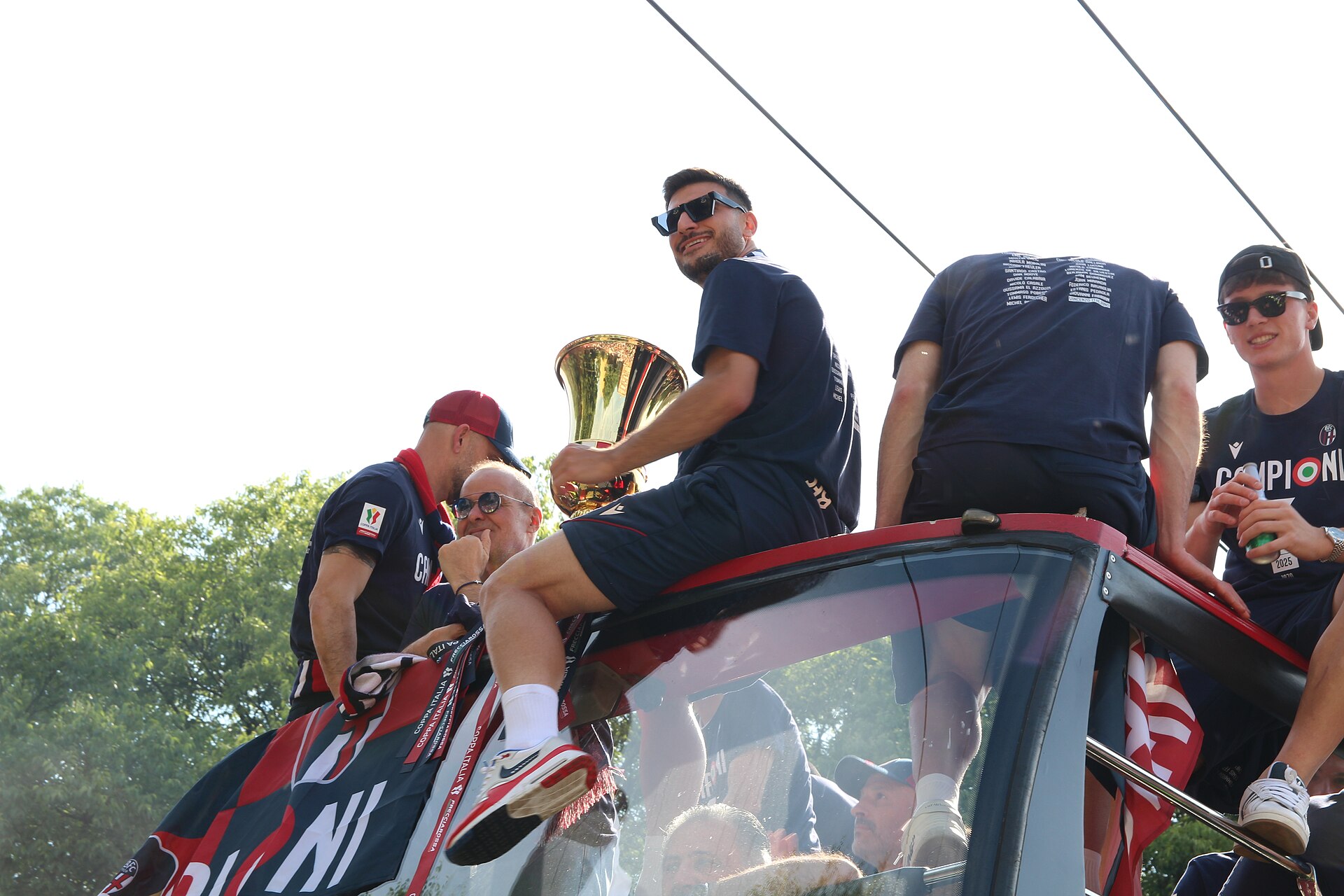
Archival cover photograph: Riccardo Orsolini and Joey Saputo at Bologna’s 2025 Italian Cup celebration, illustrating the club; not an image of the current event. Photographer/creator: Pietro Luca Cassarino. Image source and metadata; CC BY-SA 4.0. The Wikimedia-supplied thumbnail is used without further modification. Image date as recorded by the source: 2025-05-25 16:28:49.
